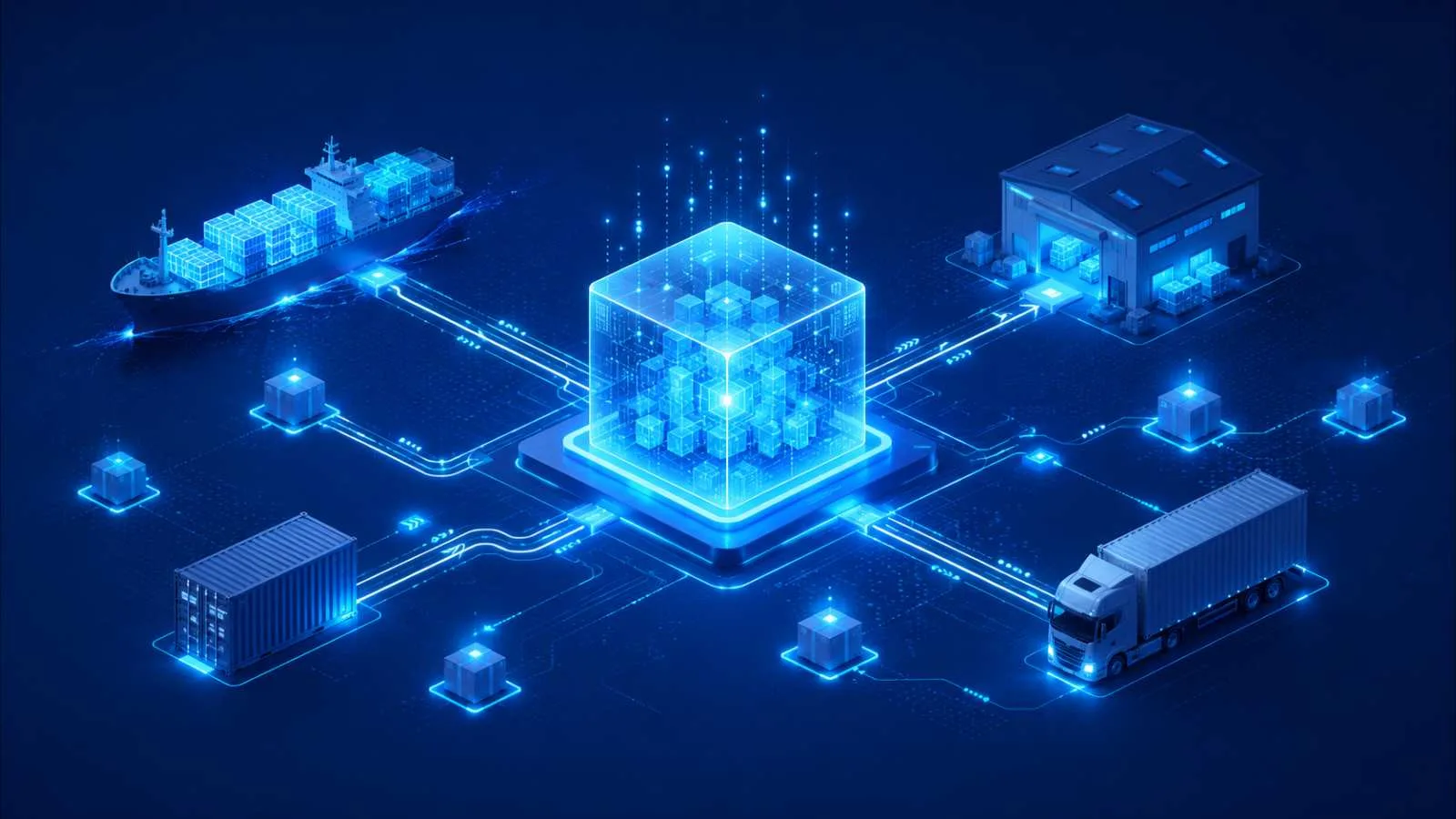
The integration of artificial intelligence (AI) into supply chain management and logistics has shifted in recent years from experimental pilot projects to a core component of operational processes. Global supply chains are more complex and more susceptible to disruption than ever before. Companies face fluctuating customer demand, volatile raw material prices, and geopolitical tensions. AI tools offer the ability to turn large amounts of data into actionable insights, making chains more resilient, efficient, and transparent.
In this article, we discuss the main domains in which AI tools add value within the supply chain, what specific functionality this software offers, and how organizations can approach a successful implementation.
Core applications of AI in the supply chain
AI technologies such as machine learning, deep learning, and natural language processing (NLP) are used to tackle diverse challenges across the chain. The main application areas can be divided into four main categories.
1. Demand Forecasting
Traditional demand forecasting methods rely largely on historical sales figures and linear statistical models. AI-driven forecasting models, by contrast, can analyze complex, non-linear relationships. They combine internal data (such as historical sales, inventory, and marketing campaigns) with external variables, including:
- Weather forecasts and seasonal influences
- Macroeconomic indicators
- Market trends and online search behavior
- Competitor data and price changes
This multivariable analysis enables organizations to achieve significantly higher forecasting accuracy, resulting in fewer stockouts and less excess inventory.
2. Inventory Optimization and Warehouse Management
Inventory management requires a continuous trade-off between service level and working capital. AI tools dynamically calculate the optimal safety stock level per location and product type (SKU). In the warehouse, algorithms drive storage locations (slotting optimization) and optimize walking and driving routes for order pickers and automated guided vehicles (AGVs).
3. Transport and Route Planning
Within logistics and transport, AI algorithms dynamically plan routes and freight capacity. The software takes into account real-time traffic information, vehicle constraints, delivery windows, and fuel consumption. This results in shorter driving times, a higher load factor, and lower CO2 emissions.
4. Supplier Management and Risk Analysis
Using Natural Language Processing (NLP), AI tools continuously analyze news sources, financial reports, weather reports, and social media to detect potential supplier risks at an early stage. Think of impending bankruptcies, strikes, or natural disasters. This allows procurement teams to take preventive action and engage alternative suppliers before production or delivery is delayed.
Comparison of AI applications by supply chain domain
To give a clear picture of the impact of AI tools, the table below provides an overview of the traditional approach versus the AI-driven approach and the associated benefits.
| Supply Chain Domain | Traditional Approach | AI-Driven Approach | Main Benefit |
|---|---|---|---|
| Demand Forecasting | Historical trend analysis via spreadsheets | Multivariable machine learning models | Higher accuracy, fewer lost sales |
| Inventory Management | Fixed reorder points and static safety stock | Dynamic inventory optimization based on real-time demand | Reduction of working capital and storage costs |
| Route Planning | Static schedules and manual adjustments | Real-time dynamic route recalculation | Fewer kilometers driven and lower fuel costs |
| Maintenance (Fleet & Machines) | Periodic or reactive maintenance | Predictive Maintenance via IoT sensors | Preventing unplanned downtime |
Key features of modern AI supply chain software
When selecting suitable software in this domain, it is advisable to check for the presence of the following core features:
- Control Towers and Real-time Visibility: A central dashboard that brings together data from ERP, WMS, and TMS systems and flags exceptions via AI.
- Scenario Analysis (Digital Twins): The ability to run simulations. What happens if demand rises by 30%, or if a major seaport temporarily closes? A digital twin calculates the impact on the entire chain.
- Automatic Recommendations and Actions: Advanced systems don't just make predictions but directly propose concrete actions (prescriptive analytics), such as automatically moving inventory between hubs.
- Seamless Integration: API connections with existing enterprise systems to break down data silos.
Challenges and conditions for implementation
Although the benefits of AI in the supply chain are significant, implementation does not proceed without challenges. Many organizations encounter obstacles related to data quality, culture, and system architecture.
Data Quality and Data Integration
AI models depend on the quality of the input data. When master data (such as delivery times, dimensions, or item numbers) is polluted or incomplete, the model's output will be unreliable. Cleaning up data and setting up a solid data governance structure is therefore a necessary first step.
Change Management and Trust
Supply chain planners and logistics staff often rely on years of experience. An AI system that gives advice contrary to the planner's intuition can encounter resistance. It is essential to provide transparency about how decisions are made (Explainable AI) and to actively involve staff in the transition.
Practical tip: Don't start with an all-encompassing transformation; instead, start with a targeted pilot project on one specific part of the chain, such as demand forecasting for a specific product group. This helps demonstrate value quickly and build internal support. For a structured approach, we refer to the AI implementation plan for SMEs on consultancy.llmnet.nl.
Future outlook: Autonomous Supply Chains
The development of AI in logistics is moving toward increasing autonomy. Where systems currently mainly support decision-making (descriptive and prescriptive), future chains will be able to independently make and execute decisions within set boundaries. Think of a system that, in the event of an impending raw material shortage, automatically places alternative orders, adjusts production planning, and rebooks transport capacity, without any human intervention.
For organizations, it is important to lay the foundation now in the form of a modern data structure and flexible software architecture, in order to fully benefit from these technological developments.